



From Cervical Cancer Claims to Client Silence: The Real Risks Advisers Need to Understand
Uncomfortable truths cannot be ignored. Facing up to them opens deeper, more honest conversations. Last week on Protection Guru, several articles tackled exactly that. From the reality of what does and does not trigger a Critical Illness claim, to how advisers unintentionally weaken their own recommendations, and why consumers walk away late in the protection process, the common thread was clarity. When medical definitions are misunderstood, policy wording is glossed over, or advice is softened at the wrong moment, clients lose confidence and outcomes suffer.
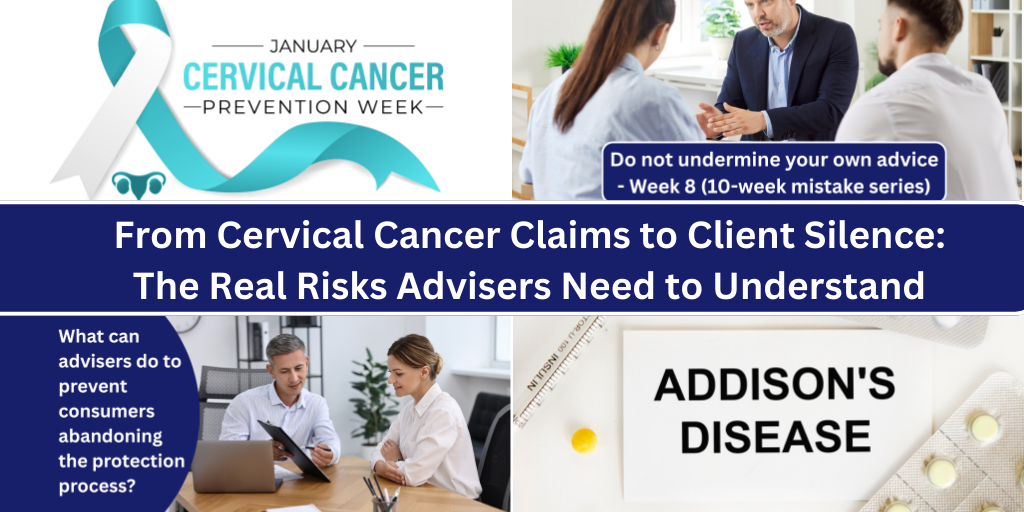
Cervical cancer and the HPV vaccine- How will this affect insurance claims? Is timely with Cervical Cancer Prevention Week taking place, it reinforces a point advisers need to be very clear on. Most Critical Illness policies only pay out for invasive cervical cancer. Pre-invasive conditions such as Cervical Intraepithelial Neoplasia (CIN) grade 3 or carcinoma in situ (CIS) often do not trigger a full claim and, where partial payments exist, they are frequently tied to outdated surgical requirements. The article also makes a longer-term point advisers should keep in mind. HPV vaccination and HPV-led screening are already reducing both CIN3 and invasive cervical cancer rates. As vaccinated cohorts move into their 30s, claims experience will change. Advisers need to understand this both for client explanations today and for setting realistic expectations about future claims trends.
Addison’s disease – a practical guide for advisers is a reminder of why detailed condition knowledge still matters, even for rare diagnoses. Addison’s disease is largely absent from the Critical Illness market, with Vitality being the notable exception. The article explains not just what the condition is, but what underwriters and claims teams actually look for in practice. For advisers, the value here is confidence. You may only see one or two cases in an entire career, but knowing how the condition is diagnosed, managed and evidenced makes a huge difference to client reassurance and to avoiding wasted applications.
On the advice process side, Matthew Chapman’s latest instalment in the “Do not undermine your own advice” series will feel uncomfortably familiar to many advisers. It focuses on what happens after a strong recommendation has been made and the client goes quiet. Too often, advisers fill that silence by offering compromises that weaken the advice before the client has even asked for them. Cheaper premiums, shorter terms and softer language can undo trust very quickly. The core message is simple but hard to execute. Hold the line. Help clients understand the consequences of compromise, rather than negotiating against yourself.
That theme links closely with the final article on What can advisers do to prevent consumers abandoning the protection process. Research from the Association of Mortgage Intermediaries shows a significant drop-off after quotes are presented. Price clearly plays a role, but so do timing, expectations and how exclusions are explained. Advisers who introduce protection earlier, frame it around real-life value and revisit it around key life events see better outcomes. Those who leave protection as an afterthought or fail to explain exclusions properly risk losing clients late in the journey.
Taken together, last week’s articles all point to the same underlying issue. Good protection outcomes rely on clarity. Clarity on medical definitions. Clarity on policy wording. Clarity in advice conversations. When advisers understand the detail and have the confidence to explain it clearly, clients are far less likely to disengage.